Sunday, January 6, 2013

All About Fiber

Fiber does so much more than just “keep you regular” – it’s essential for optimal health. Increasing your fiber intake can improve heart health, gut health, and blood sugar levels, as well as support weight loss and weight maintenance.

First Things First: What is Fiber?
 
Fiber is a kind of carbohydrate that the human body cannot digest or absorb. There are two types of fiber: insoluble fiber and soluble fiber, both of which are only found in plant foods. Each type of fiber has different benefits in the body, so both insoluble and soluble fiber should be included in a healthy diet.
®     Insoluble Fiber: does not dissolve in water
o      Function: Promotes movement through the digestive tract and increases stool bulk, which can benefit those who struggle with constipation or irregularity.
o      Good Sources: Whole grains, bran, nuts, and most vegetables

®     Soluble Fiber: does dissolve in water
o      Function: Can help lower blood cholesterol levels as well as lower blood sugar levels.
o      Good Sources: Oats, peas, beans, apples, citrus fruits, carrots, barley, and psyllium

Benefits of a High Fiber Diet

Research has shown a variety of benefits from a diet high in fiber. Want in on the following list? Gradually increase the amount of fiber-rich foods in your diet, and include plenty of water every day.

®    Normalizes bowel movements. Fiber increases the size and weight of stool, improving regularity and ease of bowel movements
®    Helps maintain bowel integrity and health. A high-fiber diet is associated with a reduced risk of hemorrhoids and diverticular disease. Research suggests it may also decrease risk of colorectal cancer.
®    Lowers blood cholesterol levels. Soluble fiber can help decrease total blood cholesterol levels by decreasing LDL (“bad”) cholesterol. Studies also show that high fiber diets can reduce blood pressure and inflammation, which can improve heart health.
®    Helps control blood sugar levels. Fiber, especially soluble fiber, can slow the absorption of sugar, which can help improve blood sugar for people with diabetes or people with hypoglycemia. A diet high in insoluble fiber has been associated with a decreased risk for developing Type 2 diabetes.
®    Aids in weight loss. Fiber adds bulk to meals, increasing the time required to consume the meal, which decreases the risk of overeating. High fiber meals also increase and prolong the feeling of fullness, which means you’re less likely to feel hungry in between scheduled meals and snacks. 

How to Increase Fiber Intake:

Yes, fiber supplements like Metamucil and Benefiber are high in fiber, but don’t provide all the benefits associated with natural sources of fiber found in whole foods. Instead of relying on supplements, increase your intake of plant foods that are naturally rich in fiber. These foods also offer other nutritional benefits, such as vitamins, minerals, and phytonutrients like antioxidants. To receive the greatest health benefit, eat a wide variety of high-fiber foods, since the type and amount of fiber varies in plant foods.

Here are a few easy ways to increase the fiber in your diet:
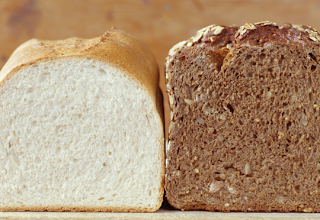
®    Eat more whole grains. Look for the word “whole” as the first ingredient in the ingredient list, and avoid white, enriched, or refined grains.
®    Eat more fruits and vegetables. Produce with the skin intact are typically higher in fiber. And juice doesn't count!
®    Eat more beans and legumes, like chickpeas, black beans, kidney beans, edamame, and peas.
®    Eat more nuts and seeds, like almonds, sunflower seeds, walnuts, pumpkin seeds, and pistachios.
®    Remember to increase the amount of fiber in your diet slowly, and include plenty of water every day; a sudden increase of fiber in the diet without adequate hydration can create some gastrointestinal discomfort.

Remember, a diet overhaul doesn't come around overnight; instead, focus on forming new habits over several weeks until it becomes your “new normal.” For example, try including a salad with dinner most nights of the week, or using fruit as a snack instead of chips. Then find some new recipes that feature beans - winter is a great time to experiment with your favorite chili recipe, after all. Each month, incorporate a new whole grain into your home; brown rice, whole grain bread, quinoa, whole grain pasta, and oats are all great whole grains that will increase the fiber in your diet as well as improve your overall nutrition. Start carrying a water bottle with you and keep track of how many times you refill it each day.
 

By making progress the main attraction, goal setting stops being a black and white “Success or Failure” but instead a gradual self-improvement project. Keep working on improving your habits, and good health will follow.
 
Thanks for reading!
Anna

Tuesday, June 26, 2012

Product of the Week: Old Orchard Healthy Balance

Last week I posted a smoothie recipe that calls for a splash of juice, and mentioned that I typically use Old Orchard’s Healthy Balance Juice Cocktails in my smoothies.
I love these products – since they are sweetened with Splenda, a cup of this juice has only a few grams of sugar and falls under 30 calories. Adding around ¼ cup to my veggie smoothies sweetens them up and provides the desired consistency without adding a lot of extra sugar and calories.
And they taste great! I’ve tried several flavors and have loved them all. My current favorite is Pomegranate Cranberry.
I usually try to stick to water or milk with breakfast, but when I’m really craving something sweet or have come down with a cold, I turn to these Healthy Balance juices. Like many fruit juices, they provide 100% of your daily vitamin C per serving.
This juice cocktail would also be a good alternative to regular juice for people who need to watch their carbohydrate intake, such as those with diabetes. 1 cup has only 5g of carbohydrates, which is about the same amount of carbohydrates as a cup of broccoli.

Moreover, I can usually find Healthy Balance juices for a very fair price – at my local Marc’s grocery store, they usually run around $1.50 to $1.80 per ½ gallon.
Has anyone tried these before? What did you think?

Thanks for reading!
Anna

*Please note: I am not paid in any way for any product endorsement at this time. I just like to share!

Monday, June 18, 2012

Recipe: Fruit & Veggie Smoothies

Do you ever get home from work to find yourself heading straight to the kitchen? Spacing out snacks and meals while at work can be a real struggle at times; meetings, watchful bosses, and a lack of refrigerators or microwaves can sometimes serve as a barrier to keeping your fire fueled. By the time you make your way home that evening, all you can think about is what’s for dinner.

Whether it’s fast food on the way home or reaching for a bag of chips from your pantry, this sudden urge to eat can throw a balanced diet completely off-track. Instead, try having a planned snack you can throw together easily when you get home. One of my favorite go-to snacks is a quick and tasty fruit and vegetable smoothie.
This is a recipe to play around with for sure - there are countless ways to combine fruits and veggies to make a smoothie, so start with some of your favorite produce and blend away! Here's my current favorite combination:
Makes 1 smoothie.

Ingredients:
·         1 big carrot, chopped into carrot coins
·         ½ bell pepper, any color
·         A handful of spinach or kale
·         1 banana
·         A handful of mango or peaches, sliced
·         A handful of berries
·         A splash of juice – I prefer Healthy Balance Juice Cocktails by Old Orchard, which are sweetened with Splenda and are extremely low calorie AND tasty.
Directions:
1.       Wash your fruits and veggies.
2.       Add veggies and juice to blender and pulse until smooth.
3.       Add fruits and blend until smooth. Enjoy!
I use my Rocket Blender by Bella Kitchens to make these smoothies, since they are the perfect size and super easy to clean. These smoothies are very kid-friendly, too; not only are they fun and easy to make, but they also sneak in lots of fruits and veggies and taste great! You can even pour them into ice cube trays or popsicle molds and pop them in the freezer for the hot summer months for a healthy summer cool-off.
This smoothie is a good way to fit in some good nutrition into a hectic schedule. It makes an excellent breakfast as well when paired with a glass of milk, bowl of cottage cheese, or other source of protein. I hope you like it as much as I do.
Try it out and let me know what you think! Remember to make it your own by swapping in and out the fruits and veggies you like best - smoothies make playing with your food a breeze. Please share any particularly victorious culinary experiments in the comments section below!
Thanks for reading!
Anna
*Please note: I am not paid in any way for any product endorsement at this time. I just like to share!

Monday, June 11, 2012

All About Whole Grains

People often ask me if carbohydrates are “bad.” The short answer is "No, not at all!" but there is so much more to know about the kinds of carbohydrates to include in a well-balanced diet.

Carbohydrates are an essential component of a healthful diet, and provide energy for your body to perform its day-to-day tasks. However, when you choose grains (which are rich in carbohydrates), make sure you’re selecting whole grains as often as possible. Whole grains are incredibly nutrient-rich, while refined grains contain about the same amount of calories but are much lower in actual nutrition.

There has been a lot of talk about whole grains in recent years, so here’s what you need to know about this nutrient powerhouse.
Why All the Hype?
A “whole grain” is a grain that contains all three components of a grain kernel – the bran, germ, and endosperm. Since all portions of the kernel contain different nutrients, eating whole grains ensures you’re getting all of the nutritional benefits possible.

Refined grains, in contrast, are grains that have lost portions of the kernel during processing, rendering them nutritionally inferior to whole grains.
What Makes Up a Whole Grain?
Bran – the protective outside layer of the kernel
·         Nutritional Benefits: fiber, B-vitamins, trace minerals, phytonutrients & antioxidants

Germ – the part of the kernel that has the potential to sprout and grow into a new plant
·         Nutritional Benefits: essential fatty acids (healthy fats), vitamin E, B-vitamins, trace minerals, protein

Endosperm – the starchy portion of the kernel, which serves as the food for the germ
·         Nutritional Benefits: starchy carbohydrates, proteins, some vitamins and minerals


What are Examples of Popular Whole Grains?
·         100% whole grain bread
·         100% whole wheat pasta or orzo
·         Brown or Wild Rice
·         Oats
·         Quinoa
·         Whole wheat flour
·         Whole wheat couscous
·         Barley
·         Bulgur
·         Whole grain rye
·         Wheat berries
·         Corn (popcorn)
How Do I Know I’m Choosing a Whole Grain Product?
The only way to be sure a product is a 100% is to look at the ingredients list. The easiest way to spot a whole grain is to see the word “whole” before any grain ingredient on the ingredients list. For example, if you see the phrase “wheat flour” and not “whole wheat flour,” then you are not looking at a whole grain product. Typically, if the word “whole” isn’t on there, then it isn’t a whole grain. A few common exceptions are brown rice, oats, and wheatberries – these grains don’t usually include the word whole in the ingredients lists, but are still true whole grains.
Companies sometimes use phrases that can be misleading to describe their grains – for example, “multi-grain” does not necessarily mean “multi-whole grains.” A 9-Grain or 12-Grain bread is not often 100% whole grain, although I have found a few exceptions over the years. Organic products are not always whole grains, either. And just because it’s a darker brown or tan than usual does not automatically mean it is a whole grain. Actually, some companies add molasses to refined grain breads instead of just sugar or high fructose corn syrup – the molasses makes it a darker color, which can lead customers to assume it is a whole grain.
Words that mean the product is definitely not a whole grain: enriched, degerminated, bran, or wheat germ.
Phrases that do mean the product is a whole grain: 100% whole grain.
For more on identifying whole grains, check out the Whole Grains Council website.
Whole grains can sometimes be more expensive than less healthful refined grains. I recommend looking for a bakery outlet (I love the Nickle’s Bakery Outlet in Parma, Ohio, where you can find great day-old whole grain breads for about $1.00/loaf) or keeping an eye out for coupons and sales online or in weekly fliers. Although bulk grains can typically be found at health food stores, traditional locally owned markets, chain grocery stores, and bulk food stores often carry them as well, and sometimes at a lower price. Shop around for the best deals, and post them in the comments section below!
I know this is (unfortunately) a pretty confusing topic. I hope that, one day, labeling laws make identifying whole grains a simple yes/no process. Until then, please leave questions in the comments section!
Thanks for reading!
Anna

Wednesday, May 30, 2012

Swimsuit Season? Already??

With Memorial Day Weekend behind us, swimsuit season is upon us! But no need to panic. Whether you’re seeking a better beach body or just a healthier lifestyle overall, here are some quick nutrition tips to feeling better and looking better this summer.

·         Keep a Food Log: No need to calorie count – unless you have a particular love for accounting. Simply recording your food intake helps you stay accountable to yourself. After all, most people already have an innate sense of what a healthful diet looks like. Look for patterns like plentiful fruit and vegetable consumption, less eating out, and smaller portion sizes to ensure your diet isn’t sabotaging your summer.
·         Drink Fewer Calories: Sugar sweetened beverages like lemonade, fruit cocktail, sweetened iced tea, soda, and sports drinks run rampant in the summertime; stick to water to not only cut out those excess calories but also stay hydrated during those warm months. Additionally, keep alcohol to a minimum (if you chose to drink at all). Drinking in moderation means no more than 1 drink per day for women (who make less alcohol dehydrogenase and have less lean body mass) and no more than 2 drinks per day for men. Alcohol packs in calories, as alcohol contains 7 calories per gram while carbohydrates and protein only contain 4 calories per gram. That’s nearly as calorie-dense as fat, which packs in 9 calories per gram. Binge drinking (drinking 4 or more alcoholic drinks in one sitting for females or 5 or more drinks for men) is especially associated with abdominal fat – not usually the desired summer look!
·         Eat Whole Grains: Cut out the refined starches and replace them with fiber-filled whole grains. This means looking for the word “whole” in the ingredients list. If the word isn’t there, then the food is typically an imposter! (Exceptions to this rule include oatmeal, wheatberries, and brown rice.) Start with switching to all 100% whole grain bread, and follow with other frequently consumed grains, like cereal, pasta, and rice. This will vastly increase your fiber intake, filling you up on fewer calories automatically – no calorie counting required. Just be sure to give yourself a chance at feeling full on smaller portions by serving yourself a little less than normal and eating more slowly. Using smaller plates and bowls can help with this.
·         Put Away the Salt: Fight bloat by reducing sodium intake. Remember, salt included in your diet is not just what you use at the dinner table or at the stove, but also what has been added by manufacturers. Most of the sodium in our diets comes from processed foods (such as boxed foods, canned foods, and pickled foods) as well as restaurant foods. By eating foods that are closer to their natural state (such as using dried kidney beans and herbs and spices instead of using a canned chili bean product), you can significantly decrease the amount of sodium in your diet. Since water follows sodium in the body, this can also lead to less bloating.
·         Lay Off the Sugar: Added sugar packs in empty calories, and can hide in all sorts of foods. Check ingredients lists for culprits, and avoid any foods that list sugar, syrup, cane juice, honey, molasses, agave, nectar, malt, or any words ending in –ose (like fructose, sucrose, maltose, etc). Some foods contain natural sugars – for example, milk has a sugar called lactose in it, and fruit contain natural fructose as well. It’s the added sugars that need to be eliminated; that’s why the ingredient list is so important. Keep in mind a teaspoon of sugar is equal to 4g of sugar (or 16 calories), while a tablespoon of sugar is equal to 12g of sugar (or about 50 calories).  Watch what you’re adding to your morning coffee or cereal – that all adds up too!
·         Eat More Fruits, Veggies, and Beans: Add them to salads, have them for snacks, puree them and sneak them into dishes, whatever it takes – just get them into your diet! It will not only fill you up for fewer calories, but also give you countless benefits from phytonutrients, vitamins and minerals, and both soluble and insoluble fiber. Fresh and frozen fruits and veggies are your best options, but rinsed canned vegetables or fruits canned in their own juices are great options as well. As for beans and legumes, either rinse canned beans before using them or pick dried instead.
Remember, numbers follow, they don’t lead. Sure, you can use extreme diets to drop a few pounds quickly, but unless you make lifestyle changes, those pounds will creep back. Instead, focus on making lasting behavior changes to your health to find your best version of yourself.

Don’t forget exercise either! No ladies, resistance training won’t bulk you up, I promise. And although we can’t target fat burn, we can target muscle building. This means countless crunches may not get rid of all tummy flab, but it will define your stomach as well as strengthen your core. Add in plenty of stretching to make those muscles long and lean, and include daily cardio to torch calories and keep your heart and lungs healthy.
Last but not least, always remember the benefits of confidence and good posture – wherever life takes you, from career to parenthood to beach vacations, put your shoulders back, head up, and smile. I learned this one from my mother J
Thanks for reading!
Anna

Tuesday, May 22, 2012

Product of the Week: Triscuit Thin Crisps

Have you ever checked out the ingredients of your favorite brand of cracker? It can be frustrating to discover that most of the crackers that line grocery store shelves are loaded with bad fats, sugar, and refined grains and offer little (if any) nutritional value. Among the few truly whole-grain crackers, I have always favored Triscuits, which are loaded with filling fiber yet manage to not taste like cardboard. The downside is that one serving of regular Triscuits is only 6 crackers, totaling to around 120 calories. Doesn’t seem like much of a snack, does it?

Recently, I discovered Triscuit Thin Crisps, which have the same ingredients as the original square crackers, but sport a smaller, thinner triangle shape. A serving of the Thin Crisps is 15 crackers for around 130 calories – a significantly more snack-like serving, if you ask me.

And check out the ingredients: Whole grain soft white winter wheat, soybean oil, salt.

That’s it! As far as crackers go, this is about as nutritious as it gets. 3g of fiber, 3g of protein, no sugar, and 100% whole grain.
Let me know what you think!

Thanks for reading,
Anna

*Please note: I am not paid in any way for any product endorsement at this time. I just like to share!

Monday, May 14, 2012

Recipe: Homemade Pizza

A lot of people talk about “good foods” and “bad foods.” I’m a dietitian who doesn’t think about food in such a black-and-white way. I believe just about anything can fit into a healthy lifestyle, as long as portion, moderation, variety, and preparation methods are all considered.

Pizza is a good example of this. I love pizza. I REALLY love pizza, actually. And I don’t think for a second that it’s an “off-limits” food entirely. Here’s my recipe for pizza that can definitely fit within an overall healthy lifestyle.
Ingredients:

·         One 6” whole grain pita
·         About 2 Tbsp pasta or pizza sauce
·         1/8 to 1/4 cup shredded white cheese (like mozzarella, pizza blend, or parmesan)
·         Finely diced fresh veggies (whatever is in your fridge - zucchini, onion, tomato, bell pepper, olives, mushrooms, jalapeno peppers, etc)
·         Grated parmesan, Italian seasoning, garlic powder, and red pepper flakes to taste
Directions:

1.       Assemble pizza by layering sauce, cheese, and toppings.
2.       Bake at 350* on a cookie sheet (I recommend not using aluminum foil for this – otherwise the bottom doesn’t really crisp) for about 20-30 minutes, or until cheese begins to brown slightly and veggies are tender.
By using a whole grain pita as the crust, limiting your cheese, and using all veggie toppings, you’ve made a version of pizza that is higher in fiber, lower in fat and cholesterol, and more nutrient dense – that means more nutrition for fewer calories. Additionally, homemade pizza can be made in a flash, is much cheaper than buying a ready-made one, and cuts out the preservatives and sodium found in frozen and restaurant pizzas.
Having a healthy lifestyle doesn’t mean you have to stop eating the foods you love; usually, recipes just require a little thoughtful tweaking and an eye to portion size to balance your plate and your diet.

I hope you enjoy this recipe! Let me know what you think.

Thanks for reading!

Anna

Saturday, May 5, 2012

12 Ways to FINALLY Get Healthy – And Yes, Lose Weight and Keep It Off!

People are always asking me how to lose weight, especially in the months leading up to swimsuit season. You probably already know that eating less and moving more leads to weight loss; however, health is more than just a number on the scale or a dress size. Instead of focusing only on your weight, pursue a healthier lifestyle – it will lead to weight loss as well as a better overall quality of life.

Here are a few specific guidelines that lead to a significantly healthier lifestyle.

1.      Determine your motivating factor. This is of utmost importance. Don’t ask yourself the question, “Why does my wife want me to lose weight?” Ask yourself why YOU want to lose weight. This reason needs to be important enough to keep you motivated as you pursue your health goals. It needs to be big enough to help you help you maintain those changes for the long term. You can definitely have more than one reason, but be sure to keep them clear, concise, and personal. They can serve as a self-empowering mantra when faced with temptations to veer off the path to a healthier lifestyle.
 
2.      Keep a food & activity journal. It doesn’t have to be every single day, but studies do show that journaling can help keep your diet on track and support lasting weight loss. You don’t have to do calorie counts and run all the numbers, but maintaining a food log keeps you accountable to yourself. You can look for overall patterns of being more active, or eating more fruits and vegetables, more whole grains, and fewer sweets or fatty snacks, for example. If you are interested in keeping track of specific numbers, try a website like livestrong.com, sparkpeople.com, or a phone app, or you can crank out the numbers yourself using a site like calorieking.com. However, all that accounting can wear a person down, and really isn’t necessary unless you are doing everything you think you can and still feel like you aren’t seeing any results.
  
3.      Find a support group/person. Whether it’s a health professional, relative, neighbor, friend, spouse, or someone you meet through a weight loss group or forum, it’s so important to find someone (or a group of people) who will offer their help and support in your journey to a healthier way of living. Additionally, those people who most closely affect your health habits (such as significant others or household members) need to be clued in that you are trying to make changes; letting them know about your new lifestyle gives them the ability to show support by not begging you to try a new fast food restaurant, buy you big boxes of chocolate to show their affections, or asking to drive to the corner market instead of walk or bike. Having a support system adds accountability to your lifestyle – not just to yourself, but with someone else. Make sure this person is a positive influence in your life, not someone who will bring you down when you have bumps in the road.


4.      Eat regularly spaced small meals and snacks throughout the day. Eating only 2-3 square meals a day makes your blood sugar peak and drop drastically after each meal, which leads to energy bursts and crashes as well as a decreased ability to portion control at mealtimes. Eating regularly throughout the day keeps hunger in check and has been shown to support weight management and helps curb hunger. See my blog on snacks for more information.

5.      Read your labels and ingredient lists. What we don’t want is to simply assume that a food is healthy without first examining the ingredients and label. The exception? Fresh fruits and vegetables. Those are always good choices. Remember, saturated and trans fats are the bad fats (see blog entry on fats here), added sugar is a no-no, and we want all our grains to be whole (check out more about label reading in my entry about picking a healthy cereal). Overall, the more unpronounceable ingredients there are on the ingredients list, the more processed it is. We want as many fresh, whole ingredients as possible.

6.      Eat more plant foods and drink plenty of water. This means fruits, veggies, beans & legumes, tofu, nuts & seeds, and whole grains. These foods provide fiber, vitamins, minerals, and lots of phytonutrients as well. Plant foods are completely cholesterol-free since cholesterol only comes from animal foods; most are also low in saturated fat. You don’t have to eat completely vegetarian to reap the benefits of plant foods, just shift your animal food to plant food ratio! Drinking more water will keep your body hydrated and ensure you don't mistake thirst for hunger.


7.      Lead an active lifestyle. Just move more. Taking your dog for a walk, your child to the park, going for a hike through a nearby metro park, walking around the zoo, gardening, biking to a friend’s house, taking the stairs at work, mowing the lawn, exergaming, vacuuming; all these add up to an active lifestyle. It isn’t exercise, but it does keep you from living a sedentary life.

8.      Make time to exercise most days of the week. And be realistic about your expectations! Gentlemen, you may never look like Vin Diesel. Ladies, you may never be a size two. Instead of going into the gym with unrealistic expectations of losing 5 pounds in a day, having cut abs and Michelle Obama arms, and finally fitting into those skinny jeans by this weekend, aim to gain self-confidence in yourself and in your body. Fixating on a “right” size will just lead to frustration and negative associations with working out. It’s easy to think being a certain weight will lead to happiness in all other realms of your life, but that isn’t how it works. When you exercise, think of what you are doing for your heart, for your longevity and long-term mobility. Learn to take pride in your body and its ability to carry you farther, lift more weight, or become more flexible. Exercise to clear your mind, help your body, find a sense of peace, create a routine, and sleep better, and stop worrying about those skinny jeans. Most health experts recommend fitting in at least 150 minutes of moderate to intense exercise each week, so work on increasing those minutes week by week until you hit your goal.

9.      Get at least 7 hours of sleep every night. This may sound impossible for some, but it really is the best thing to do for your health – and your weight. Neglecting your sleep schedule can mean messing up the amount of certain hormones your body makes while you’re sleeping, including hormones involved with signaling hunger, appetite, and satiety. Turn off the TV, put down your work, and get into bed at a decent hour; sleep needs to be a priority in your life.

10.  Limit the salty snacks, savory desserts, fast food/eating out, and sugary drinks – in short, lay off the junk food. This is an obvious one. Is it a food that is going to help you or hurt you? Are you eating it to fuel your body or your appetite?

11.  Eat appropriate portion sizes. Use smaller plates, smaller cups, smaller utensils. Serve yourself. Look at serving sizes on food labels for guides. Think quality, not quantity. Eat more slowly and don’t go back for seconds until at least 20 minutes as passed. All in all, eat less of the not-so-great stuff and pile high the fruits and veggies. MyPlate (the new food "pyramid") is a good example of what a balanced meal can look like. 
 
12.  Stay positive. Staying optimistic about your progress and dealing with obstacles as they come greatly improves the chances of turning your lifestyle around permanently – as well as losing those extra pounds and keeping them off. Negative self-talk puts you at risk of falling back to old habits. When you see a number on the scale you don’t like, or if you really veered off your diet for a day (or a month), instead of talking down to yourself and focusing on the bad, think about the ways you can get back on the wagon and what has worked for you in the past. Studies show that people who were more positive throughout a weight loss journey were the ones that managed to achieve their weight goals and keep those extra pounds off for the long run.

Thanks for reading!

Anna

Thursday, April 26, 2012

Recipe: Easy Cucumber Salad

When my friend invited me over for a night with the girls, I knew I wanted to make something healthy and fresh-tasting for the potluck, but I also didn’t want to spend much money and I was pretty strapped for time. This cold cucumber salad was the perfect balance of nutrition, ease, and taste, and cost me less than $4 to make. Best part? I didn’t have any leftovers to take home – I call that a successful recipe!


Makes 6-8 servings.
Ingredients:
·         1 ½ English cucumbers, chopped
·         3 ripe tomatoes, chopped
·         1 orange, red, or yellow bell pepper, chopped
·         ¼ cup light oil and vinegar salad dressing (try Ken’s Lite Italian)
·         2 Tbsp grated parmesan
·         A little black pepper and Italian seasoning, to taste
Directions:
·         Combine all the ingredients in a big bowl. Mix well.
·         Cover and chill for at least 2 hours, shaking occasionally.
Yep, that’s it. Simple, cheap, healthy, and delicious – this is the way food is supposed to be! It doesn't have to be complicated to taste great.
Give it a try and let me know what you think!
Thanks for reading!
Anna

Wednesday, April 18, 2012

Product of the Week: Maple & Brown Sugar OatFit Instant Oatmeal

As an oatmeal enthusiast, I definitely understand that cooked oatmeal is not necessarily the easiest food on-the-go. For those times when you’re especially in a hurry, or while you’re at work, I would recommend trying OatFit Instant Oatmeal, made by BetterOats.


This oatmeal is a great mid-morning snack, and takes only 90 seconds in the microwave to cook. There are several similar products on the market, but the thing I like about this instant oatmeal (besides the taste) is that is has no added sugar and is only 100 calories a pouch. This makes it stand apart from similar products, which can have upwards of 12 grams of sugar a pouch (that’s a full tablespoon of sugar!) With 3 grams of fiber and added flaxseed, this whole grain product makes a filling snack with the health benefits of whole grains.
Any other lower sugar instant oatmeal products you've found? Please share with us!
As always, thanks for reading!

Anna

*Please note: I am not paid in any way for any product endorsement at this time. I just like to share!